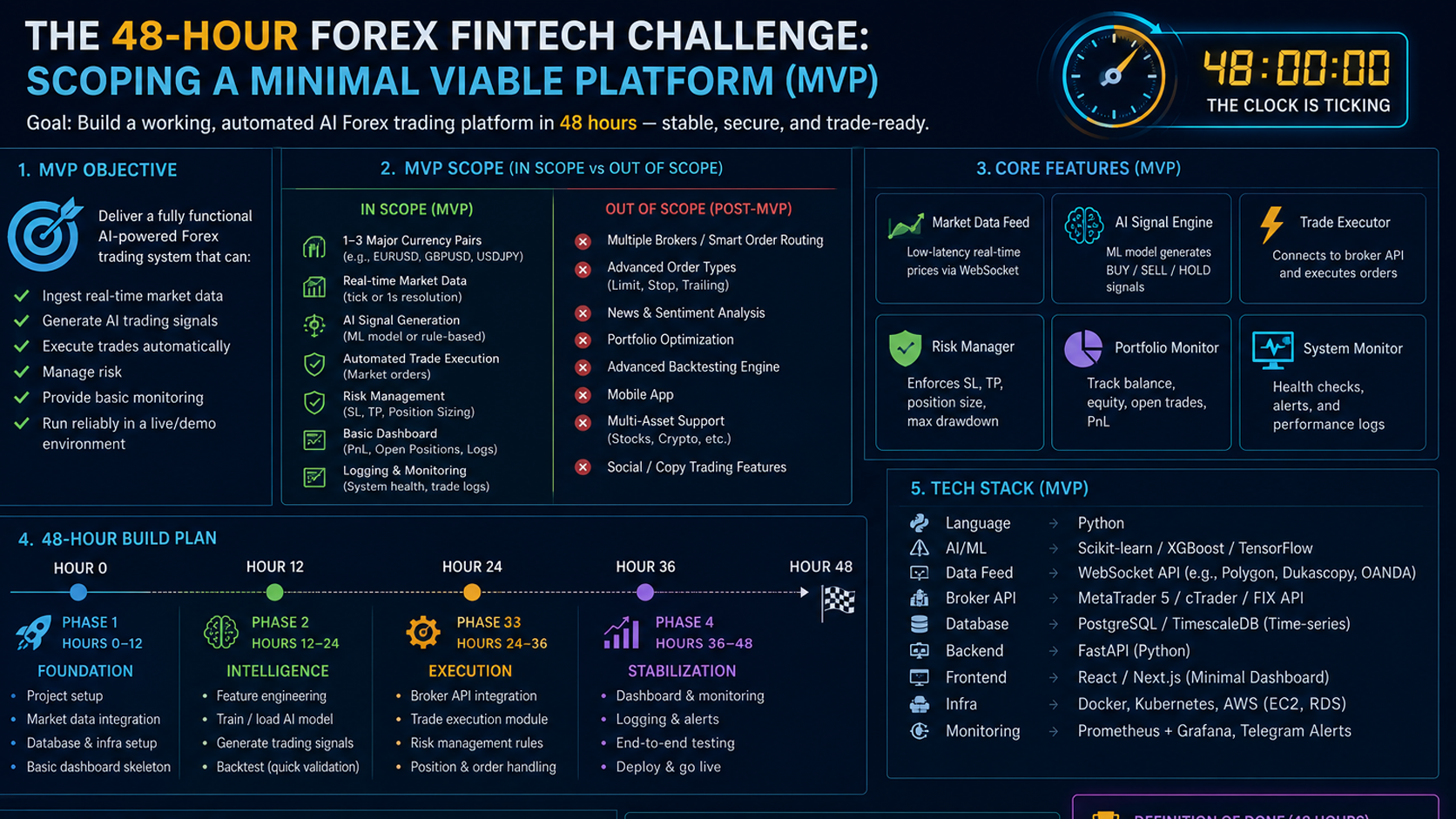
Launching a forex trading platform used to take months of development, heavy capital, and complex regulatory approvals. However, in 2026, the landscape has changed dramatically. Thanks to AI-driven infrastructure, white-label solutions, and automation tools, you can now start a forex trading platform in just 48 hours—if you follow the right strategy.
In this guide, you will learn exactly how to build, launch, and scale a forex brokerage platform quickly while staying compliant, user-friendly, and highly profitable. More importantly, this guide is designed with SEO optimization, user intent, and conversion strategy in mind, so it not only ranks on Google but also converts visitors into real users.
Why Start a Forex Trading Platform in 2026?
First and foremost, the global forex market remains the largest financial market in the world, with over $7.5 trillion in daily trading volume (latest BIS data 2025–2026). As a result, the opportunity for new brokers is still massive.
Moreover, several trends are driving rapid growth:
- Increased retail trader participation globally
- AI-based trading tools boosting user engagement
- Mobile-first trading behavior
- Demand for low-cost and fast execution platforms
Therefore, if you position your platform correctly, you can attract traders faster than ever before.
Step 1: Define Your Forex Business Model (Hours 0–4)
Before you jump into technology, you must clearly define your business model. Otherwise, you risk building a platform that doesn’t convert users.
Choose Your Broker Type
There are three main models:
- Market Maker (B-Book): You take the opposite side of trades
- STP (Straight Through Processing): Orders go directly to liquidity providers
- ECN (Electronic Communication Network): Traders interact with each other
While beginners often choose white-label STP, experienced founders may combine models to maximize profits.
Identify Your Target Audience
At the same time, when you plan to Start Forex Trading Platform in 48 Hours, defining your audience becomes essential because it directly impacts how effectively your platform converts users into active traders.
Beginner traders, for instance, require educational resources, guided onboarding, and a simple, intuitive UI to start trading confidently. On the other hand, professional traders expect advanced charting tools, ultra-low spreads, and high-speed execution to maximize their trading strategies. Meanwhile, regional traders from markets like India, UAE, and Southeast Asia prefer localized payment options, language support, and region-specific features.
Consequently, when you Start Forex Trading Platform in 48 Hours, your UX design, pricing model, and marketing strategy must align with these audience segments to ensure higher engagement, better retention, and increased conversions.
Step 2: Choose a Forex Platform Technology (Hours 4–10)
Now comes the most critical decision—your trading platform technology.
Option 1: White-Label Forex Platform
This is the fastest way to launch within 48 hours.
- Ready-made infrastructure
- Built-in liquidity integration
- Custom branding
- Lower upfront cost
Option 2: Custom Development (Not Recommended for 48 Hours)
Although custom platforms offer flexibility, they take months to build. Therefore, they are not suitable if speed is your priority.
Must-Have Features in 2026
To stay competitive, your platform must include:
- AI-powered trading signals
- Real-time analytics dashboard
- Multi-device compatibility (Web + Mobile)
- One-click trading execution
- Advanced charting tools
- Risk management systems
In addition, platforms that integrate AI-based predictive analytics tend to have 40% higher user retention rates.

Step 3: Integrate Liquidity Providers (Hours 10–16)
Without liquidity, your platform cannot function. Therefore, integrating a reliable liquidity provider is essential.
What is a Liquidity Provider?
A liquidity provider supplies buy/sell quotes and ensures smooth trade execution.
Key Factors to Consider
- Tight spreads
- Fast execution speed
- Multiple asset classes (Forex, commodities, indices)
- Stability during high volatility
As a result, choosing the right provider directly impacts user satisfaction and retention.
Step 4: Set Up Payment Gateway & Wallet System (Hours 16–22)
Next, you must enable deposits and withdrawals.
Supported Payment Methods in 2026
- UPI (for India)
- Credit/Debit Cards
- Crypto payments (optional but trending)
- E-wallets
Why This Step Matters
A slow or unreliable payment system leads to immediate user drop-off. On the other hand, a seamless payment experience increases conversions significantly.
Step 5: Implement AI-Based Trading Algorithms (Hours 22–30)
Now comes the game-changing part—AI integration.
Why AI is Critical in 2026
AI is no longer optional. Instead, it is a key differentiator.
Features to Include
- AI trade recommendations
- Risk scoring for traders
- Automated stop-loss/take-profit suggestions
- Behavioral analytics
Real Impact
Platforms using AI algorithms report:
- 30–50% higher user engagement
- Increased trading volume
- Better user retention
Therefore, integrating AI is not just a feature—it’s a growth engine.
Step 6: Ensure Compliance & Legal Structure (Hours 30–36)
Although speed is important, compliance cannot be ignored.
Key Considerations
- Choose a favorable jurisdiction (UAE, Seychelles, Mauritius)
- KYC (Know Your Customer) verification
- AML (Anti-Money Laundering) compliance
- Data protection policies
Why This Step is Crucial
Without proper compliance:
- Payment gateways may block your platform
- Users may lose trust
- Legal penalties may occur
Hence, even in a 48-hour launch plan, compliance must be built in from the start.
Step 7: Design a High-Converting User Experience (Hours 36–42)
Now that the backend is ready, focus on the front-end experience.
Key UX Elements
- Clean dashboard
- Simple onboarding process
- Fast account verification
- Easy navigation
Conversion Optimization Tips
- Use clear CTA buttons (Start Trading, Deposit Now)
- Reduce friction in sign-up
- Provide demo accounts
As a result, a well-designed UX can increase conversions by up to 70%.
Step 8: Launch Marketing & User Acquisition Strategy (Hours 42–48)
Finally, launching your platform without marketing is a major mistake.
High-Impact Marketing Channels
- SEO blogs (like this one)
- Google Ads (high-intent keywords)
- Social media campaigns
- Influencer partnerships
SEO Keywords to Target
- Start forex trading platform
- Forex broker setup 2026
- Launch forex brokerage fast
- Forex white-label solution
Content Strategy for Traffic
To rank quickly, focus on:
- Long-form blogs (2000+ words)
- Problem-solving content
- High CTR meta titles
- Internal linking
Advanced SEO Strategy for Fast Indexing
To ensure your blog ranks quickly on Google, follow this SEO algorithm:
On-Page SEO
- Use primary keyword in title, H1, and first 100 words
- Add secondary keywords naturally
- Optimize meta description (under 155 characters)
Technical SEO
- Fast loading speed
- Mobile optimization
- Structured data markup
Content SEO
- Use transition words (therefore, moreover, however, etc.)
- Maintain readability
- Provide real solutions
Common Challenges & Solutions
Challenge 1: High Competition
Solution: Focus on niche markets and unique features
Challenge 2: User Trust Issues
Solution: Add transparency, reviews, and strong branding
Challenge 3: Regulatory Confusion
Solution: Work with compliance experts
Cost to Start a Forex Platform in 2026
Although costs vary, here is a realistic breakdown:
- White-label platform: $5,000 – $25,000
- Liquidity integration: $2,000 – $10,000
- Licensing & compliance: $10,000 – $50,000
- Marketing: $5,000+
Therefore, you can start with as low as $20,000–$30,000 depending on your approach.
Final Thoughts: Is 48 Hours Realistic?
Yes—but only if you:
- Use white-label solutions
- Automate processes
- Focus on essentials first
However, long-term success depends on continuous improvement, marketing, and user experience.
Conclusion
Starting a forex trading platform in 48 hours is no longer just an idea—it is a practical strategy in 2026. With the right combination of AI technology, compliance, and user-centric design, you can build a platform that not only launches fast but also scales efficiently.
More importantly, success in this industry depends on how well you solve user problems. Therefore, instead of just building a platform, focus on creating a seamless trading experience.