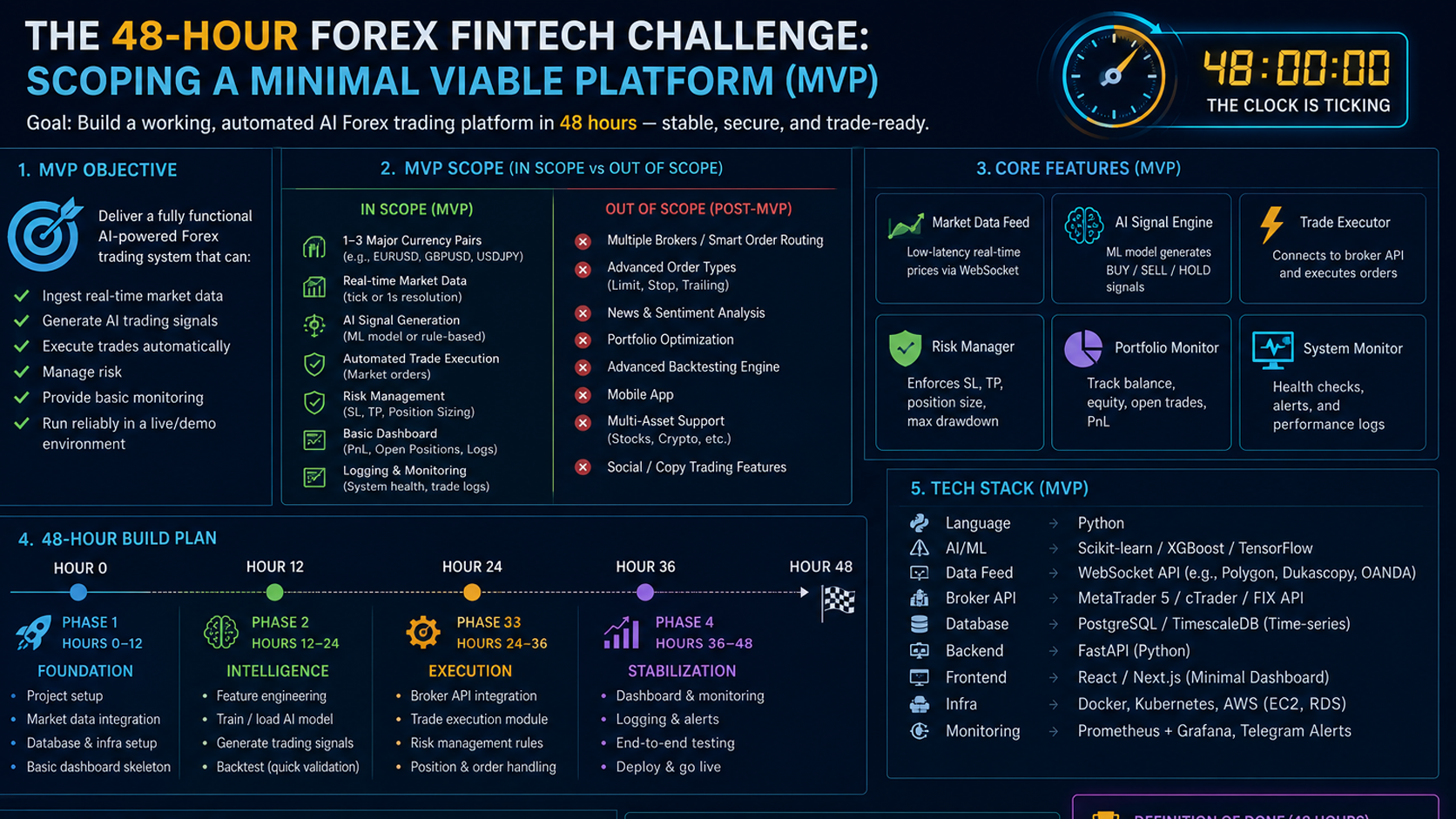
The Future of Digital Finance Starts with Forex Trading Platforms
The global fintech industry is evolving faster than ever before. As artificial intelligence, automation, blockchain, and digital payments continue reshaping financial services, one sector is quietly becoming one of the most profitable opportunities in 2026 — Forex trading platforms.
Today, thousands of startups, fintech entrepreneurs, financial institutions, influencers, and investment firms are entering the Forex industry because the demand for online trading is growing globally. Moreover, retail traders are actively looking for secure, AI-powered, mobile-friendly trading platforms that provide real-time market access and better user experiences.
As a result, Forex brokerages are no longer limited to large financial corporations. Instead, technology has made it easier, faster, and more affordable to launch a Forex trading business.
In fact, according to recent market reports, the global online trading platform market is expected to grow significantly in 2026 due to:
- Increased retail trading activity
- AI-powered trading tools
- Rising smartphone usage
- Growth in fintech startups
- Demand for automated trading
- Expansion of crypto and Forex integration
Therefore, businesses that invest in Forex trading platform development today are positioning themselves for long-term revenue growth.
What Is a Forex Trading Platform?
A Forex trading platform is a digital software solution that allows users to buy, sell, and trade currencies in real time. These platforms connect traders to liquidity providers, financial markets, and broker infrastructures.
Typically, a modern Forex platform includes:
- Live market charts
- AI-based analytics
- Copy trading features
- Automated trading bots
- Secure payment systems
- Multi-device access
- Risk management tools
- CRM integrations
- Real-time reporting dashboards
Most importantly, users now expect seamless mobile experiences, instant execution speeds, and AI-driven insights.
Because of this shift, traditional broker models are rapidly becoming outdated.
Why Forex Trading Platforms Are Growing Rapidly in 2026
1. Massive Growth in Retail Trading
Over the last few years, retail trading participation has increased dramatically worldwide. People are no longer relying solely on banks or traditional investments. Instead, individuals are actively exploring:
- Forex trading
- Crypto trading
- Commodities
- CFDs
- AI-assisted investing
Furthermore, social media platforms like YouTube, TikTok, Telegram, and X (Twitter) have accelerated trading awareness globally.
Consequently, millions of users are searching for reliable trading platforms daily.
Real-World Problem Businesses Face
Many new brokers struggle because existing platforms lack:
- personalization
- automation
- user-friendly interfaces
- localized payment options
- multilingual support
Therefore, companies that solve these issues have a massive opportunity in 2026.

2. AI Is Revolutionizing Forex Trading
Artificial Intelligence is now becoming a core component of modern trading systems.
Today’s users expect platforms to provide:
- AI-powered trade signals
- predictive analytics
- automated risk management
- smart portfolio analysis
- behavioral trading insights
As a result, Forex companies integrating AI technologies are attracting more traders and improving customer retention.
How AI Algorithms Improve Trading Platforms
Modern AI models analyze:
- market volatility
- historical patterns
- trader behavior
- liquidity changes
- economic news data
Then, the system generates intelligent recommendations in real time.
Because of this, traders can make faster and smarter decisions.
Example
An AI-powered Forex platform can:
- identify high-probability trade opportunities
- detect unusual market conditions
- automate stop-loss strategies
- reduce emotional trading mistakes
Therefore, AI integration has become a major competitive advantage.
Why Investors Are Choosing Forex Businesses
High Revenue Potential
Forex brokerages generate revenue through:
- spreads
- commissions
- swaps
- white-label partnerships
- copy trading fees
- premium subscriptions
Unlike traditional businesses, Forex platforms can scale globally without opening physical offices.
As a result, profit margins are significantly higher.
Recurring Revenue Model
One of the biggest advantages of Forex businesses is recurring revenue.
Instead of relying on one-time sales, brokers earn continuously from:
- active traders
- monthly subscriptions
- trading volumes
- affiliate programs
Consequently, Forex businesses can create stable long-term income streams.
Biggest Challenges Faced by Forex Companies in 2026
Although the market is growing rapidly, many companies still face major operational problems.
1. Poor User Experience
Many trading platforms are outdated and difficult to use.
Common issues include:
- slow execution
- confusing dashboards
- poor mobile responsiveness
- complicated onboarding
However, modern users expect simplicity and speed.
Therefore, businesses that focus on UX/UI design are outperforming competitors.
2. Lack of AI Automation
Many brokerages still depend heavily on manual operations.
As a result, they face:
- delayed customer support
- poor lead conversion
- inefficient marketing
- high operational costs
Fortunately, AI automation can solve these challenges.
AI Solutions Include:
- automated customer onboarding
- AI chatbots
- smart lead scoring
- automated compliance verification
- personalized trader recommendations
Consequently, operational efficiency improves dramatically.
3. Security and Compliance Concerns
Cybersecurity is one of the biggest concerns in fintech today.
Traders expect:
- encrypted transactions
- secure wallets
- KYC verification
- anti-fraud systems
- regulatory compliance
Therefore, Forex platforms must invest heavily in:
- blockchain security
- multi-factor authentication
- AI fraud detection
- secure cloud infrastructure
Without proper security, user trust declines rapidly.
Essential Features Every Forex Trading Platform Needs
AI-Powered Analytics Dashboard
Modern traders need more than simple charts.
They want:
- predictive insights
- volatility alerts
- AI-generated trading suggestions
- automated reporting
Therefore, advanced analytics dashboards are now essential.

Mobile Trading Applications
Mobile trading is dominating the market.
In fact, most retail traders now prefer smartphones over desktop platforms.
As a result, businesses should prioritize:
- Android trading apps
- iOS trading apps
- real-time notifications
- biometric login security
Multi-Language and Multi-Currency Support
Forex is a global business.
Therefore, platforms must support:
- multiple languages
- regional payment gateways
- local currencies
- localized user experiences
This significantly improves user acquisition globally.
CRM and Trader Management Systems
Successful brokerages depend heavily on CRM systems.
A powerful Forex CRM helps businesses:
- track leads
- automate sales
- improve retention
- manage IB partnerships
- monitor trading behavior
Consequently, conversion rates improve significantly.
Why 2026 Is the Perfect Time to Launch a Forex Trading Platform
Rising Fintech Adoption
The fintech market is expanding globally.
Moreover:
- digital banking is increasing
- online payments are growing
- remote investing is becoming mainstream
- AI adoption is accelerating
Therefore, Forex platforms are benefiting from broader fintech growth.
Lower Technology Barriers
Previously, launching a Forex brokerage required massive infrastructure investments.
However, modern technologies now allow:
- cloud deployment
- white-label solutions
- scalable AI integrations
- API-based liquidity systems
As a result, startups can launch much faster and at lower costs.
White Label vs Custom Forex Trading Platform
White Label Forex Solutions
White-label solutions allow businesses to launch quickly using pre-built infrastructures.
Advantages
- faster launch
- lower development costs
- easier maintenance
- quick scalability
Disadvantages
- limited customization
- shared infrastructure
- dependency on providers
Custom Forex Trading Platforms
Custom-built platforms provide complete control.
Advantages
- unique branding
- AI customization
- advanced scalability
- better security
- custom trading features
Disadvantages
- higher development costs
- longer development timeline
Therefore, businesses aiming for long-term growth usually prefer custom development.
How AI-Based Algorithms Are Changing the Forex Industry
AI-driven algorithms are transforming:
- risk analysis
- trading execution
- fraud detection
- lead generation
- customer support
AI Models Commonly Used
- machine learning
- predictive analytics
- natural language processing
- behavioral analysis
- sentiment analysis
These systems continuously learn from user activity and market movements.
As a result, trading platforms become smarter over time.
SEO and Digital Marketing Opportunities for Forex Businesses
Many Forex companies fail because they ignore SEO and digital marketing.
However, organic traffic is one of the biggest lead-generation channels in fintech.
High-Converting SEO Strategies
Target Commercial Keywords
Examples:
- start Forex brokerage
- Forex trading platform development
- Forex broker license
- Forex CRM solutions
- AI Forex trading software
Create Problem-Solving Content
Users search for solutions, not generic information.
Therefore, businesses should create:
- setup guides
- cost breakdowns
- compliance solutions
- comparison articles
- AI trading insights
Why User-Centric Design Matters in Forex Platforms
Modern traders expect:
- simple onboarding
- fast withdrawals
- personalized dashboards
- educational resources
- instant support
Therefore, user-centric platforms achieve:
- lower bounce rates
- higher retention
- increased trust
- better conversion rates
In contrast, outdated systems lose users quickly.
Future Trends in Forex Trading Platforms
AI Copy Trading
AI-assisted copy trading is becoming extremely popular.
Users can automatically follow successful traders using intelligent algorithms.
As a result, beginner traders can participate more confidently.
Blockchain Integration
Blockchain technology improves:
- transparency
- transaction speed
- security
- decentralized verification
Therefore, many modern Forex platforms are integrating blockchain features.
Social Trading Communities
Trading is becoming increasingly community-driven.
Users now prefer:
- social engagement
- leaderboards
- live strategy sharing
- collaborative trading
Consequently, platforms with community features are seeing higher retention.
How Businesses Can Succeed in the Forex Industry
To succeed in 2026, Forex businesses must focus on:
- AI integration
- user experience
- automation
- cybersecurity
- compliance
- SEO-driven marketing
- mobile-first development
Most importantly, companies must solve real-world trader problems instead of simply launching generic platforms.
Businesses that prioritize innovation and customer trust will dominate the market.
Conclusion
Forex trading platforms are becoming one of the biggest fintech opportunities in 2026 because global demand for online trading continues growing rapidly.
At the same time, AI, automation, blockchain, and mobile technologies are transforming how traders interact with financial markets.
Therefore, businesses entering the Forex industry today have a massive opportunity to:
- build scalable fintech brands
- generate recurring revenue
- expand globally
- leverage AI-powered automation
However, success depends on creating secure, user-friendly, AI-driven trading platforms that genuinely solve customer challenges.
As competition increases, companies focusing on innovation, trust, and user experience will become industry leaders.
The future of fintech belongs to intelligent Forex trading ecosystems — and 2026 is the ideal time to enter the market.
Ready to Launch Your Forex Trading Platform?
Whether you want:
- a white-label Forex solution,
- AI-powered trading platform,
- Forex CRM integration,
- liquidity management system,
- or complete brokerage setup,
now is the perfect time to build your Forex business.
Launch Faster. Scale Globally. Lead the Future of Fintech.
Website: www.edgeyon.com
Email: support@edgeyon.com