The United Arab Emirates has quickly become one of the most attractive destinations for crypto businesses. With clear regulations, business-friendly policies, and global investor interest, the UAE is now a hotspot for launching crypto exchanges. However, before entering this market, one critical question arises—how much does a crypto exchange license actually cost in the UAE in 2026?
The answer is not as simple as a fixed number. Instead, it depends on multiple factors such as jurisdiction, business model, compliance requirements, and operational scale. Therefore, understanding the full cost structure is essential if you want to build a sustainable and compliant crypto exchange.
In this detailed guide, you will learn everything about crypto exchange license costs in the UAE, including hidden expenses, regulatory requirements, and strategic insights to optimize your investment.
Understanding the UAE Crypto Regulatory Landscape
The UAE has established itself as a global leader in crypto regulation by introducing structured frameworks instead of imposing restrictions. As a result, businesses can operate with clarity and confidence.
At the center of this ecosystem is Virtual Assets Regulatory Authority, which regulates crypto activities in Dubai. Meanwhile, Abu Dhabi Global Market operates under its own regulatory authority for financial services, including crypto businesses.
Additionally, Dubai Multi Commodities Centre provides a business-friendly environment for startups entering the crypto space.
Because of these structured authorities, businesses can choose a jurisdiction that aligns with their budget and operational goals.
Why the UAE Is Ideal for Crypto Exchange Businesses
The UAE offers a combination of regulatory clarity, tax advantages, and global connectivity. Therefore, many crypto startups prefer launching here instead of other regions.
One major advantage is the presence of zero personal income tax and favorable corporate tax structures in certain zones. Moreover, the UAE government actively supports blockchain innovation, which creates a strong ecosystem for growth.
In addition, access to international banking, investors, and advanced infrastructure makes it easier to scale operations globally. As a result, even though the initial cost may seem high, the long-term benefits often outweigh the investment.
Types of Crypto Licenses in the UAE
Before understanding the cost, it is important to know that there are different types of crypto licenses available, and each comes with its own pricing structure.
A crypto trading license allows you to operate a platform where users can buy and sell digital assets. On the other hand, a brokerage license enables you to facilitate transactions without holding user funds directly.
There are also custody licenses for managing user assets securely, as well as proprietary trading licenses for firms trading their own capital.
Because each license serves a different purpose, the cost varies accordingly. Therefore, choosing the right license is the first step in controlling your budget.

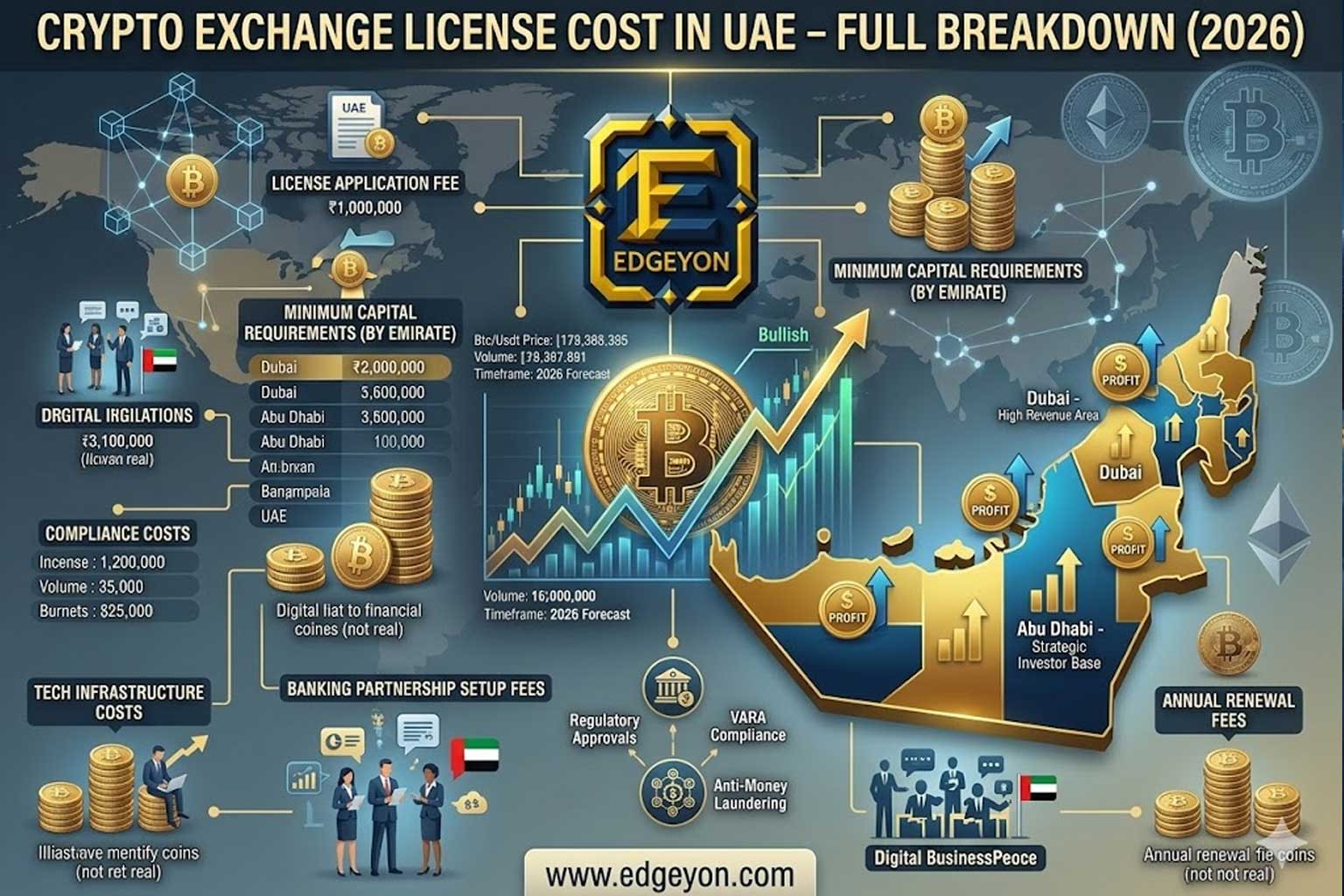
Full Cost Breakdown of Crypto Exchange License in UAE (2026)
The total cost of obtaining a crypto exchange license in the UAE is a combination of several components. Understanding each of these helps you plan your investment more effectively.
The license application fee is the first major expense. Depending on the jurisdiction, this can range from moderate to high. Free zones like DMCC generally offer more affordable entry points, while fully regulated financial zones like ADGM may require a higher investment.
Next comes company formation cost. This includes registration, documentation, and legal structuring. Although this may seem like a one-time expense, it plays a crucial role in establishing your business credibility.
Office space is another requirement in most jurisdictions. Even if you operate digitally, having a physical presence is often mandatory. The cost varies depending on location and size.
Compliance costs form a significant portion of your budget. These include KYC systems, AML frameworks, and reporting mechanisms. Since UAE regulations are strict, investing in compliance is not optional.
Technology development is another major expense. Building a secure and scalable trading platform requires advanced infrastructure, including trading engines, wallet systems, and security protocols.
In addition, liquidity setup requires capital to ensure smooth trading operations. Without sufficient liquidity, your platform cannot function effectively.
Finally, there are ongoing operational costs such as staff salaries, maintenance, and regulatory renewals. These recurring expenses must be considered when calculating your total investment.
Overall, the total cost of starting a crypto exchange in the UAE can range from approximately $100,000 to over $500,000 depending on your scale and strategy.
Hidden Costs Most Businesses Ignore
While many entrepreneurs focus on licensing and development, they often overlook hidden costs that can impact profitability.
Banking setup is one such challenge. Opening a corporate bank account for a crypto business can be complex and may involve additional fees and compliance checks.
Legal consultation is another overlooked expense. Since regulations are constantly evolving, ongoing legal support is necessary to stay compliant.
Marketing and user acquisition also require a significant budget. Without a strong marketing strategy, even the best platform may struggle to attract users.
Therefore, planning for these hidden costs ensures that your business remains financially stable in the long run.
Step-by-Step Process to Get a Crypto License in UAE
The process of obtaining a crypto license in the UAE involves several stages, and each stage must be handled carefully.
It begins with selecting the right jurisdiction based on your business model and budget. Once this is finalized, you need to register your company and prepare the required documentation.
The next step involves submitting your application to the regulatory authority. This includes detailed information about your business model, compliance framework, and operational strategy.
After submission, the authority conducts a thorough review. This may include background checks, financial assessments, and technical evaluations.
Once approved, you can proceed with setting up your operations, including technology integration, staffing, and compliance systems.
Finally, after meeting all requirements, you receive your license and can officially launch your crypto exchange.

AI and Technology Impact on Cost Optimization
In 2026, AI plays a significant role in reducing operational costs and improving efficiency.
AI-powered KYC systems can automate identity verification, reducing manual effort and processing time. Similarly, fraud detection algorithms help prevent financial losses by identifying suspicious activities in real time.
AI also enhances user experience by providing personalized recommendations and improving platform usability. As a result, businesses can achieve higher conversion rates with lower operational costs.
Therefore, integrating AI is not just a technological upgrade—it is a strategic investment that improves profitability.
How to Reduce Crypto License Costs in UAE
Although the cost of starting a crypto exchange in the UAE can be high, there are ways to optimize your budget without compromising quality.
Choosing the right jurisdiction is one of the most effective strategies. Free zones often provide cost-effective solutions compared to mainland options.
Using white-label solutions instead of building from scratch can significantly reduce development costs. This approach allows you to launch faster while maintaining essential features.
Outsourcing certain operations, such as compliance and customer support, can also help reduce expenses. However, it is important to ensure that quality and security are not compromised.
By making strategic decisions, you can minimize costs while maximizing efficiency.
Challenges in UAE Crypto Licensing
Despite its advantages, the UAE crypto market presents certain challenges.
Regulatory compliance is strict, and failing to meet requirements can result in delays or rejection. Therefore, attention to detail is crucial during the application process.
Banking remains another challenge, as not all banks are crypto-friendly. This can slow down operations if not handled properly.
Competition is also increasing as more businesses enter the market. Therefore, differentiation and user experience become key factors for success.
However, these challenges can be managed effectively with proper planning and expert guidance.
Future of Crypto Licensing in UAE
The future of crypto regulation in the UAE looks promising. As the industry matures, regulations are expected to become more streamlined and supportive.
Government initiatives continue to promote blockchain innovation, attracting global investors and businesses. At the same time, advancements in technology will further enhance security and efficiency.
As a result, the UAE is likely to remain a leading destination for crypto businesses in the coming years.
Final Thoughts: Is the Investment Worth It?
Starting a crypto exchange in the UAE requires a significant investment, but the potential returns make it worthwhile. With the right strategy, compliance framework, and technology, you can build a highly profitable and scalable business.
The key is to approach the process with clarity and precision. By understanding the cost structure, planning your budget, and leveraging modern technologies, you can position your business for long-term success.
Ultimately, the UAE offers not just a license, but a gateway to the global crypto market. Those who take advantage of this opportunity today are likely to lead the industry tomorrow.